Review: Trend Conference Regulatory Law 2026
With around 100 participants, five high-calibre specialist presentations and fascinating discussions, our 14th Trend Conference Regulatory Law took place once again in a hybrid format on 10 March 2026 – and impressed attendees both on-site in Frankfurt am Main and online with its high-quality content and in-depth exchanges. Below is a professional review of the conference day.


Mit dem Laden des Videos akzeptieren Sie die Datenschutzerklärung von Vimeo.
Mehr erfahren
Included in this collection:
Open collection
The Schufa shadow database: a data protection scandal or a necessity for the credit industry?

High-NPL institution: Requirements for NPL strategy, governance and operational organisation

EBA Supervisory Reporting Simplification or Complication

9th MaRisk Amendment 2026 – Supervisory Briefing: Focus following the consolidation phase

End of support for SAP Bank Analyzer – msg.ORRP as an alternative

Why Europe’s banks need to reassess geopolitical risks

Bundesbank’s Targeted Review of the design of lending guidelines in the LSI environment

AMLR Redefines Risk Analysis: Moving Beyond a Checkbox Exercise – Why Regulators Are Rethinking Their Approach

9th Amendment to the MaRisk 2026: What reliefs does the consultation offer to small and very small institutions (SNCIs)?

Instant Payments Regulation: Implementing Reporting Requirements Efficiently – Excel Upload or an Integrated Reporting Solution?
That was the 14th Trend Conference Regulatory Law
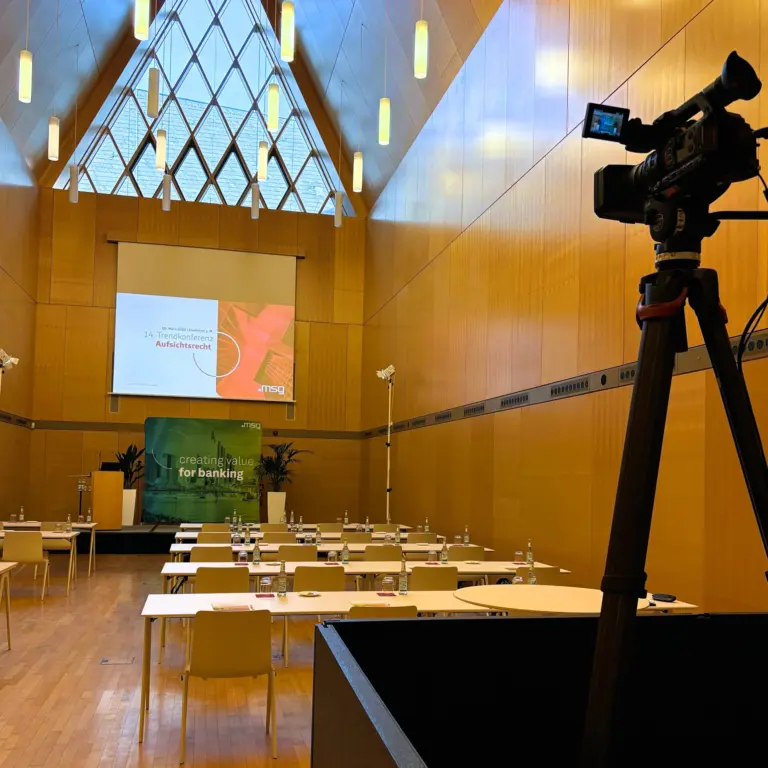
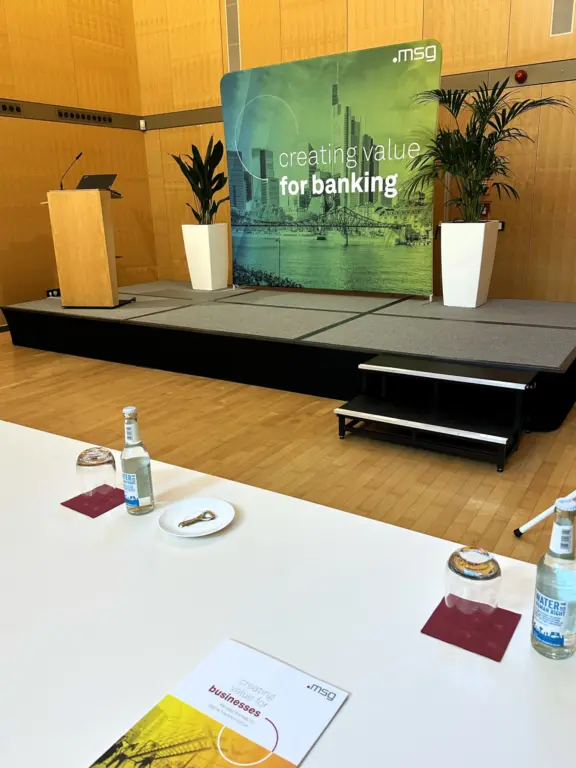
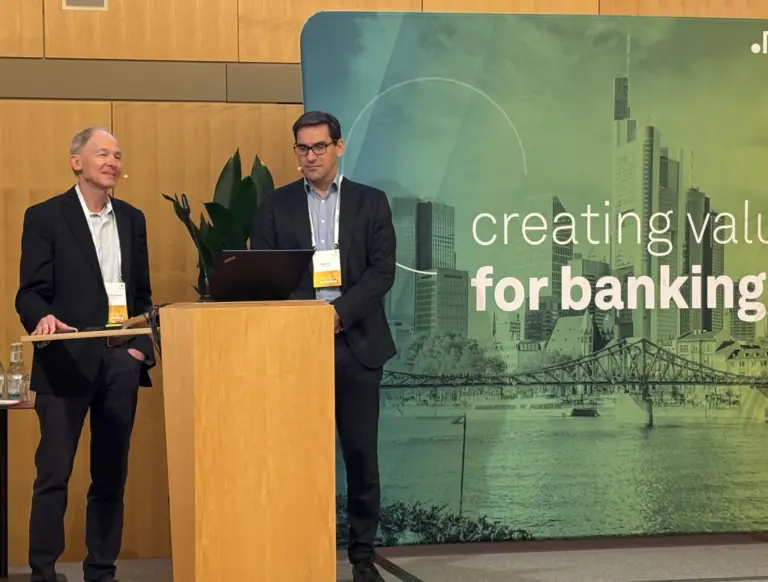

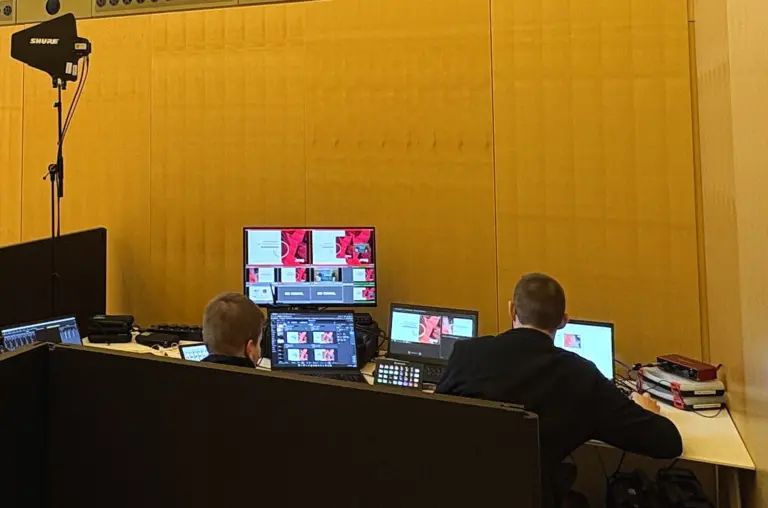
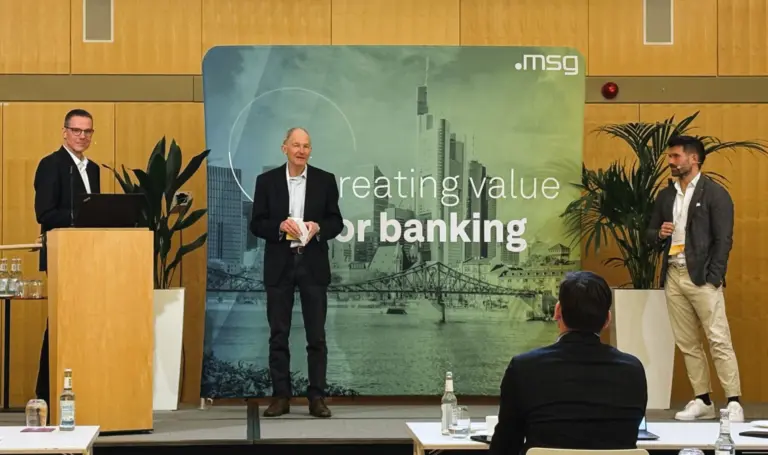
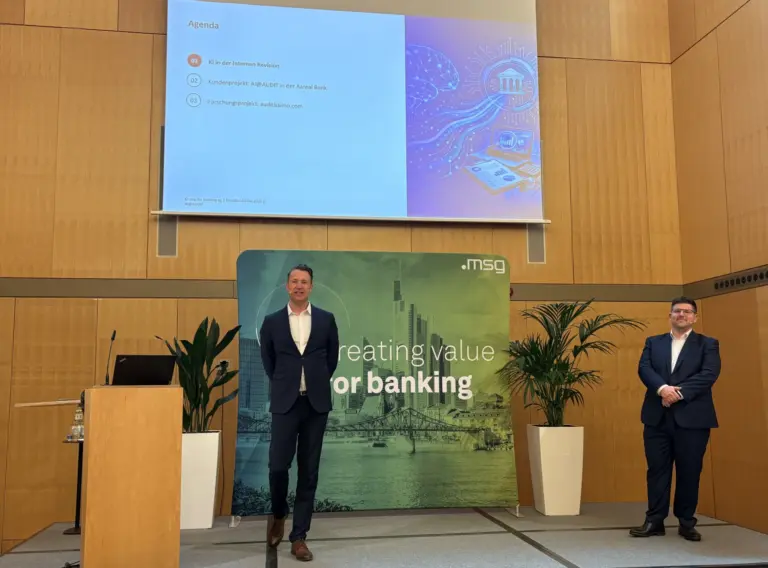
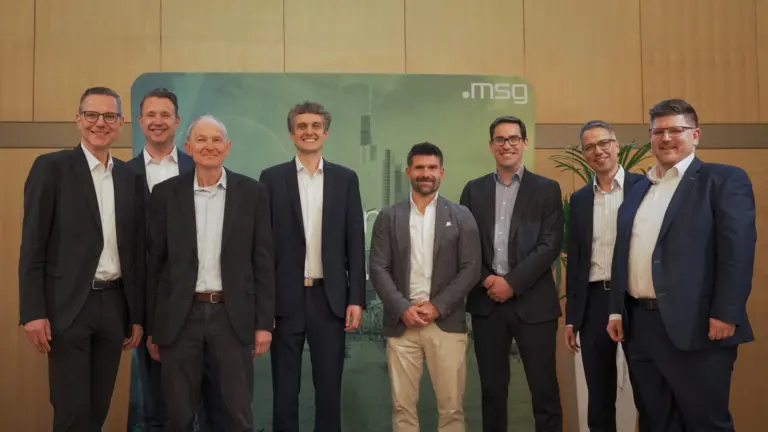


On 10 March 2026, it was that time of year again – at the annual regulatory conference organised by msg for banking ag, participants were once more treated to an engaging programme on current regulatory topics, featuring speakers from banking supervision and the banking sector.
The 14th Trend Conference Regulatory Law was once again held in a hybrid format. Participants were able to choose whether to attend the event in person or watch the live stream.
Prof. Dr Konrad Wimmer and Holger Dürr (both from msg for banking) once again co-hosted this long-established event. This time, they focused on “the new MaRisk”, the future of “sustainability” and the presentation of AI project results.
The new MaRisk
Dr Torsten Kelp (BaFin) gave a very clear presentation in his talk “MaRisk – Consequences of the Reorientation”, outlining the changes that the new MaRisk amendment will bring. The BaFin is pursuing several objectives here, including reducing complexity, strengthening proportionality, streamlining the regulations on lending activities – for example, by removing self-evident provisions and numerous references to the relevant EBA guidelines – and addressing overarching ESG risks more clearly, which are to be incorporated more fully into the principles section. Overall, the following applies:
More focus on principles and fewer detailed regulations.
The institutions will have greater scope to flesh out the regulations. This is where the discussion begins, as institutions will need to position themselves accordingly in view of the removal of certain requirements in the future.
Sustainability
After a coffee break, the focus shifted to the topic of “sustainability”. Prof. Dr Konrad Wimmer (msg for banking) discussed the problematic and hesitant adoption of the Omnibus Regulation by the EU. However, he also explained that, from a banking supervisory perspective, ESG risks continue to be a high priority.
Michael Endmann (Stadtsparkasse München) outlined the current status of sustainability implementation within his own institution. He also made it clear that, whilst the politically mandated watering down of sustainability requirements (see Omnibus Package) might tempt institutions to pause the implementation processes they have already begun, This is not advisable, as the new Section 26c of the German Banking Act (Kreditwesengesetz, KWG) sets out in detail the requirements for incorporating ESG risks into risk management. In particular, institutions are required under Section 25a of the KWG to draw up an ESG risk plan in accordance with Section 26d as part of their risk strategy. His remarks were illustrated with concrete examples; amongst other things, institutions require energy performance certificates for property valuation. Flood risks cannot be deduced from the postcode of the financed property; rather, the house number is the decisive factor.
Sebastian Bader (msg for banking) gave a vivid account of practical projects and derived plausible implementation tips for institutions from them.
Artificial Intelligence
After the lunch break, participants were given a fascinating insight into the current developments in AI models. Kay Dietrich (Aareal Bank) and Prof. Dr Dirk Schieborn (Reutlingen University / msg for banking) demonstrated how audit departments can now operate at a whole new level using specially trained AI models. For example, contractual texts can be checked very quickly for compliance with legal requirements – a process that has hitherto involved a time-consuming manual procedure.
During the presentation, participants were able to follow the analysis of test cases live on a demo system. The pace of change in this field is extremely rapid, and it became clear just how significant the implications and changes AI will bring to day-to-day working life.
Credit Spread and SREP 2.0
Finally, two presentations outlined the latest developments regarding credit spread risks and SREP 2.0.
Rainer Alfes (msg for banking ag) examined the range of regulatory requirements regarding credit spread risks, including with reference to the EBA heat map from January this year. He highlighted the need for action on the part of institutions, in particular the need to decide which interest-bearing transactions should be included. Prof. Dr Konrad Wimmer (msg for banking) supplemented these remarks with a number of numerical examples.
The topic of SREP 2.0 holds particular significance for this event, as the SREP Draft 1.0 was the catalyst for the ‘Trend Conference Regulatory Law’ format 14 years ago. In the presentation by Prof. Dr Konrad Wimmer and Marco Lesser (both from msg for banking), it quickly became clear that the SREP framework developed will continue to apply in the future. Using a number of selected aspects, they demonstrated the changes that SREP 2.0 will bring.
The SREP is being expanded into a comprehensive framework.
Whilst the existing core elements will be retained, they will be significantly expanded through the integration of new aspects such as ESG factors, operational resilience, the interaction between Pillar 1 and Pillar 2 capital requirements, and the incorporation of the previously separate ICT SREP Guidelines (EBA/GL/2017/05).
Conclusion
The event has once again demonstrated that the fields of risk management and banking governance remain in a state of flux, and that both regulatory requirements and technological progress will lead to further changes in these areas.
We would like to take this opportunity to extend our warmest thanks to all the speakers and participants for their valuable support, without which this exciting event would not have been possible. The success of the event means that we are once again able to make a significant donation to charitable causes this year.