



Banking 2026: Banking regulation, the digital euro, European payments and the topic of ESG
The year 2025 was challenging in many ways, including for banks. What does 2026 hold in store for banks? We discussed this with Andreas Mach, member of the Executive Board, Rainer Wilken, Head of Management & Business Consulting, and Stefan Baumann, Head of Management Consulting.
In the second part of our three-part expert discussion ‘Banking 2026’, we discuss the shortage of skilled workers in banks, the changing corporate culture and the continuing geopolitical volatility.
The questions are asked by Andrea Späth and Karin Dohmann.
By the way: At msg for banking, we are on first-name terms across all hierarchies and maintain this approach in our interviews with colleagues.
Regulation: It’s exciting that the banking supervisors themselves want some relief.
Welcome to the third part of our expert discussion, Andreas, Rainer and Stefan. Today we're talking about regulation, which has developed very dynamically in recent years. Do you think that banks will be able to take a deep breath next year or are the screws already being tightened?
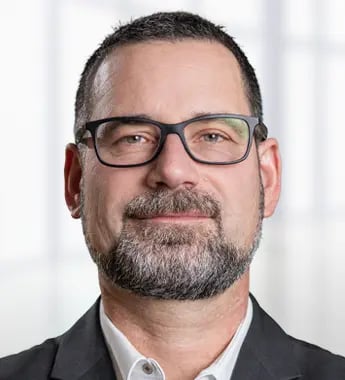
Andreas Mach: „In terms of regulation, the intensity of regulation will level off somewhat, because with CRR III and with DORA we have just had very extensive and far-reaching regulatory requirements that had to be implemented by the banks, and which still entail a lot of residual activities, including due to audits by auditors or banking supervisors.
The issue of combating money laundering and terrorist financing will once again become a much more prominent focus, particularly in Germany.
Andreas MachMember of the Executive Board
Nevertheless, regulation, risk measurement and control will of course continue. Regulations will still be needed to mitigate significant risks. These include, for example, dealing with new types of risk or non-financial or operational risks. The issue of combating money laundering and terrorist financing will also come into much sharper focus, particularly in Germany.
There is always a need to make adjustments here and there, but I do not foresee any major new complex requirements in traditional banking supervisory law for the time being. The upcoming MaRisk amendment will certainly contain few completely new provisions, as much has already been regulated at European level in advance.
The latest development is the idea of a small banking box or small banking regime, which has been formulated by BaFin and the Bundesbank for Europe in a non-paper. These are entirely new concepts that aim to make the rules more proportional, simplify them and reduce bureaucracy in order to lower the barriers for small and less complex banks (as a rule of thumb, one could assume a balance sheet total of approximately EUR 10 billion). However, this is still under discussion, so it is difficult to say what will happen next year or when these changes will be implemented in European or national law. It is exciting, however, that the banking supervisors themselves want to see simplification.
Three-part series of articles on the non-securities of Deutsche Bundesbank and BaFin
1. Blog post: Small banking regime – an initiative by BaFin and the Bundesbank by Roland Helbig
2. Blog post: Reducing regulatory complexity in capital requirements: A solution proposed by BaFin and the Bundesbank by Simon Feyen and Devi Ndoj
3. Blog post: Business and risk policy implications of a small banking regime and reformed capital requirements by Roland Helbig, Sandra Danner, Simon Feyen and Devi Ndoj
Banks also need to address this issue and consider what it means for them. What the advantages and disadvantages are for them (for example, if Pillar 1 were to switch from traditional management of capital adequacy based on risk-weighted assets (RWA) to the leverage ratio as the sole key figure, as has been propagated). How they have to position themselves and how this affects the overall competitive situation.“
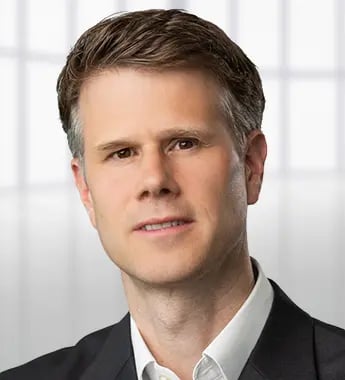
Stefan Baumann: „These considerations are important, as the additional complexity between national and European supervision overstretches the resources of medium-sized and smaller banks in particular.
Particularly in an international comparison, it is crucial that there is greater regulatory harmonisation. Especially if we want to create a competitive environment compared to the USA or other large blocs such as China.
Unfortunately, however, Europe is still lagging behind other regions in this regard. A simplified and uniform set of rules is also important for attracting investment, which is essential for economic recovery.“
AMLA, crypto & co. – one of BaFin's focus areas for 2026 is the prevention of money laundering and terrorist financing in the financial sector. In your opinion, how well positioned are banks in this area?
Andreas Mach: „Many requirements have already been formulated, but everyone knows that Germany, of all countries, is unfortunately relatively far behind in terms of money laundering prevention when compared to other countries worldwide. There are various reasons for this: perhaps we have not yet implemented all requirements efficiently enough, or perhaps the technology used, the underlying models or the risk analyses carried out could still be optimised.
That is why it is important that the AMLA is based in Frankfurt. On the one hand, because it means we are close by. And on the other hand, because Germany will naturally be a focus. The political complexity in the Middle East and the sanctions against Russia are, of course, making the situation increasingly difficult. Significant changes in know-your-customer (KYC) processes are necessary in order to detect money laundering, terrorist financing, etc.
However, in practice, I see that internal bank processes in particular need to become more efficient and effective rather than new regulations being drawn up. As I said, we are already well advanced in terms of the rules, but there is still a lot of catching up to do in terms of implementation.“
In general, the digital euro is therefore strongly driven by monetary policy and strategic reasons – rather than by the need to enable payment transactions.
Stefan BaumannDivision Manager Management Consulting
Blockchain, tokenisation and digital assets are transforming the financial infrastructure. What role can the digital euro play in this?
Stefan Baumann: „The idea of a digital euro – which only came about due to pressure from other initiatives pursuing a digital currency – offers the central bank the opportunity to gain control over cash flows here in Europe.
In Germany in particular, there is still a very high proportion of cash in circulation, even if this is declining. With a digital euro, which can be regarded as digital cash, the central bank would have a high degree of control. In addition, the aim is to reduce dependence on non-European payment service providers.
In general, the digital euro is therefore strongly driven by monetary policy and strategic reasons – rather than by the need to enable payment transactions. It remains to be seen how widely accepted the digital euro will be in Germany.“
Was meint ihr: Wie beziehungsweise wohin entwickelt sich der europäische Zahlungsverkehr?
Andreas Mach: „A major issue related to this is the planned FIDA regulation. This is a huge undertaking. It is not yet 100% certain that it will come into effect, but we all assume that it will.
The aim of FIDA is to standardise payment flows between a wide range of financial service providers and create the basis for an open European financial data space.
This naturally entails risks – and very extensive regulatory requirements. Various minimum requirements must be met in order to ensure secure data exchange between a wide range of stakeholders in the market.
But there are also opportunities, because FIDA allows you to use information, data, etc. from other players in the market and gain insights that you can then use yourself.“

Five innovative use cases that demonstrate how FIDA can be used not only to
conceive new business models, but also to implement them in practice.
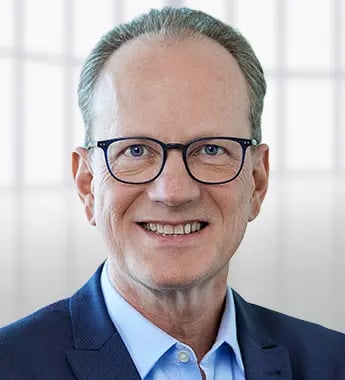
Rainer Wilken: „One more word about Wero, the new European payment service. Unfortunately, it took quite a long time politically to agree on a common solution in Europe. There are simply too many complex structures, countries and decision-makers. But now the system is slowly establishing itself.
One reason for this is that PayPal, for example, is no longer considered trustworthy by some market participants due to the geopolitical situation.
Many European banks, including German ones, will jump on the Wero bandwagon in 2026.
Rainer WilkenBusiness Unit Manager Managment & Business Consulting
On the other hand, the recent cyber incident, which meant that PayPal payments could not be made at all on some days, did not exactly inspire confidence. This has given Wero a significant boost. Many European and German banks will jump on the Wero bandwagon in 2026 and ensure that payments can also be processed with Wero.
ESG and sustainability issues seem to have lost importance in banking. Is that the case? Or will banks have to adapt to new ESG regulations in 2026?
Andreas Mach: „In my opinion, ESG remains as important as ever. The regulatory requirements have only been relaxed slightly so as not to overwhelm companies and the financial industry with detailed requirements.
But we have to address this issue for social reasons alone. We must ensure that there is no discrimination and that child labour is not promoted or supported, to give a couple of examples from the social sphere. With regard to environmental issues, financial service providers must continue to ensure that they primarily finance projects that benefit the environment rather than harm it, or that contribute positively to the transition and CO2 reduction. And these issues are the subject of unanimous consensus among all C-level decision-makers and board members I know.“
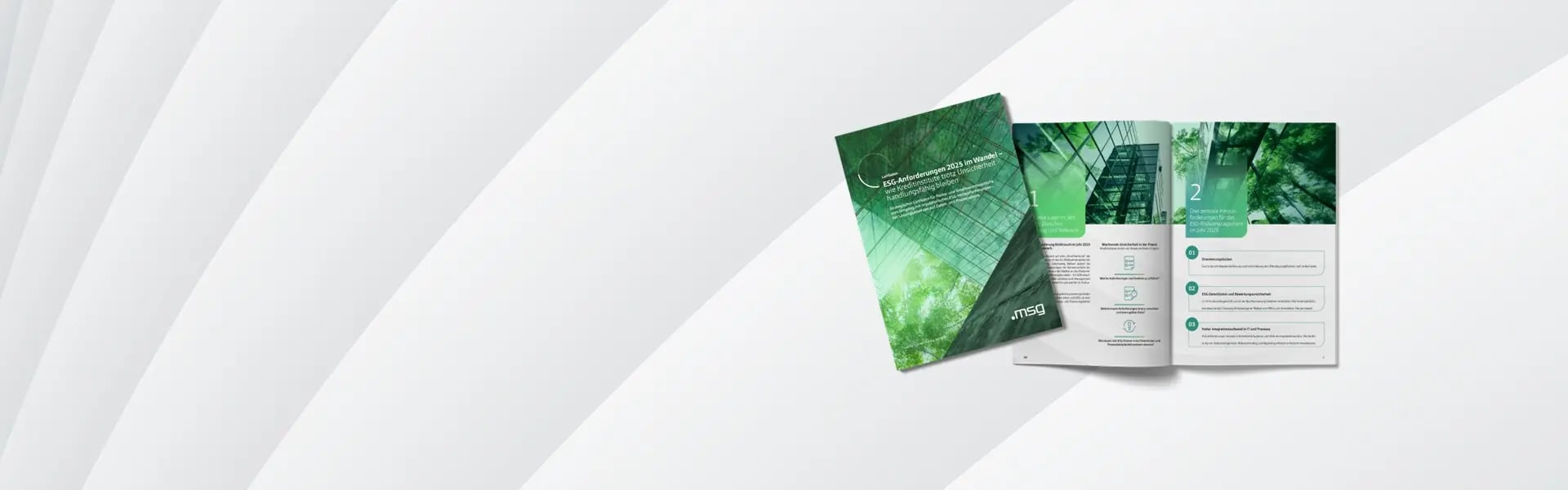
ESG requirements 2025 in transition
How credit institutions remain capable of acting
despite uncertainty.
Stefan Baumann: „The issue is still important, but the banks were under a certain amount of pressure here. That’s why they’re glad that the requirements have been lowered somewhat.
Banks can now consider which industries they want to support, which customers they want to work with, and which products they want to offer their customers. They now have some time to take a breather, step back and consider what their long-term goals should be. And they should seize this opportunity next year.“
Rainer Wilken: ‘I see it the same way. Even though the issue has been scaled back somewhat by the supervisory authorities, banks still need to address it and transform their risk management and product development in line with ESG principles. Of course, they are happy about the relaxation of the rules, but the issue of sustainability remains important simply because more and more customers, especially younger ones, are willing to pay more for a sustainable business model.’
Our Experts
Andreas Mach, Member of the Executive Board, responsible for Sales and Marketing and for the Management & Business Consulting divisions. In addition, he has been active for many years as an author, speaker, consultant, and expert in the areas of bank management, risk management, controlling, regulation, compliance, analytics, and artificial intelligence.
Rainer Wilken, Business Unit Manager of Management & Business Consulting, has extensive experience in establishing and expanding consulting businesses for financial services, business development, sales management, and customer service, as well as comprehensive expertise in the transformation of banking organizations. His focus is on strategic transformation and technology-driven business models.
Stefan Baumann, Division Manager Management Consulting, has more than 20 years of experience in the banking and finance industry. He supports banks with strategic issues relating to business development and optimization—from mergers, board changes, and business model adjustments to organizational development and the use of modern technologies in the operating model.