CRR III and the property business: Removing the brake on new business
NEWS 01/2026
CRR III is shaking things up in the property sector, particularly with regard to ADC and IPRE exposures. However, it need not act as a brake on new business: institutions that classify, assess and document precisely, actively manage key credit parameters and price RWA in line with the underlying risk can limit capital tied up whilst maintaining scope for growth.


CRR III is causing a stir in the property sector, particularly regarding ADC and IPRE1 exposures. Individual cases are already showing noticeable effects on capital ratios. For instance, a major cooperative bank reported a 90-basis-point decline in its total capital ratio in early February, partly as a result of the new ADC/IPRE classification logic with high initial risk weights. In this respect, CRR III is therefore having an impact on the practice of property financing.
However, it need not act as a brake on new business: institutions that classify, review and document precisely, actively manage key credit parameters and price RWA (risk-weighted assets) in line with the underlying risk can significantly limit capital tied up whilst retaining scope for growth.
Would you like to read more?
Already have an account? Then simply log in. New to Banking.Vision? Register now and enjoy free access to all content.
Related Collections
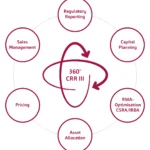
CRR III - 360° view
The revision of the Capital Requirements Regulation (CRR) will bring some significant changes from 2025 onwards that will affect all credit institutions and all types of risk. With a 360° view, we shed light on all the implications of this reform – from capital planning, which already extends beyond the date of application, to asset allocation, pricing and sales management to reporting requirements. You can find the latest articles on this topic here.

Finance, Risk & Regulatory Reporting
The financial world of the future requires smart, digital solutions. Complex industry-specific, business and regulatory requirements are accelerating the development of financial institutions to ensure consistency between regulatory reporting, risk management and financial controlling. These areas will no longer be separated in the future. Instead, they will be aspects of integrated bank management. Integrated, networked solutions and modern cloud services that reflect both the complexity of each individual topic and the consistency between topics will therefore be essential for managing a bank in the future. In our series ‘Finance, Risk & Regulatory Reporting’ we present the latest developments.