









OCT Inst explained (Part 2 of 4): How the scheme works
Abstract
OCT Inst enables international instant credit transfers by connecting the euro leg with non-euro payment infrastructures through defined participant roles and standardised processing rules. Entry PSPs and Exit PSPs validate, translate, and route transactions between the European instant-payment environment and external payment systems. Incoming and outgoing flows follow different processing paths, but both require real-time validation, status handling, and clear confirmation or rejection messages within defined time limits. Participating PSPs therefore need an always-on operating model that supports 24/7/365 availability, straight-through processing, settlement certainty, and real-time liquidity management.
OCT Inst explained – Blog series
This article is part 2 of a four-part series on OCT Inst. Part 1 introduced the scheme and explained why it matters for cross-border payments. Part 3 will cover implementation steps for banks and PSPs, and Part 4 will assess the scheme’s benefits and considerations. The remaining parts will be published on Banking.Vision shortly.
How OCT Inst works
In Part 1, we introduced OCT Inst as Europe’s response to a familiar challenge in cross-border payments: customers increasingly expect international transfers to be as fast, transparent, and reliable as domestic instant payments. We explained why the scheme matters and how the „one-leg-out“ concept establishes common rules for the euro leg of an international payment.
Understanding the concept, however, is only the starting point. To assess what OCT Inst means for payment service providers (PSPs), it is necessary to examine how transactions move through the scheme, which roles are involved, and what happens when the euro leg connects with the non-euro leg (European Payments Council, n.d.).
Participant roles in the scheme
OCT Inst defines specific participant roles that connect the euro leg and the non-euro leg of a transaction. The principal roles are outlined below (European Payments Council, 2025a).
Euro Leg Entry PSP
The Entry PSP acts as the gateway from the non-euro leg into the euro leg. For an incoming international instant credit transfer, it receives and validates the payment information, converts it into the OCT Inst-compliant format, establishes settlement certainty, and forwards the transaction through the euro-leg infrastructure.
Euro Leg Exit PSP
The Exit PSP performs the corresponding gateway role for an outgoing transaction. It receives the OCT Inst transaction from the euro leg, validates it, and forwards the payment information into the non-euro leg, thereby connecting the EPC-governed environment with an external payment system.
Payer’s PSP and Payee’s PSP
The Payee’s PSP in the euro leg validates the incoming transaction, credits the beneficiary’s account when the applicable conditions are met, and returns either a positive or a negative confirmation message.
The Payer’s PSP in the euro leg receives the payment instruction, performs the required checks, and initiates the transaction in accordance with the applicable OCT Inst process.
Together, these participants enable automated, real-time processing within the euro leg while maintaining interoperability with external payment arrangements (European Payments Council, n.d.).
The payment flow
OCT Inst supports account-to-account international instant credit transfers. The euro-leg process differs depending on whether a transaction enters or leaves the euro leg (European Payments Council, 2025b).
Incoming OCT Inst (non-euro leg to euro leg)
For an incoming transaction, the process begins outside the euro leg. The following steps provide a simplified view of a successful transaction (European Payments Council, 2025a):
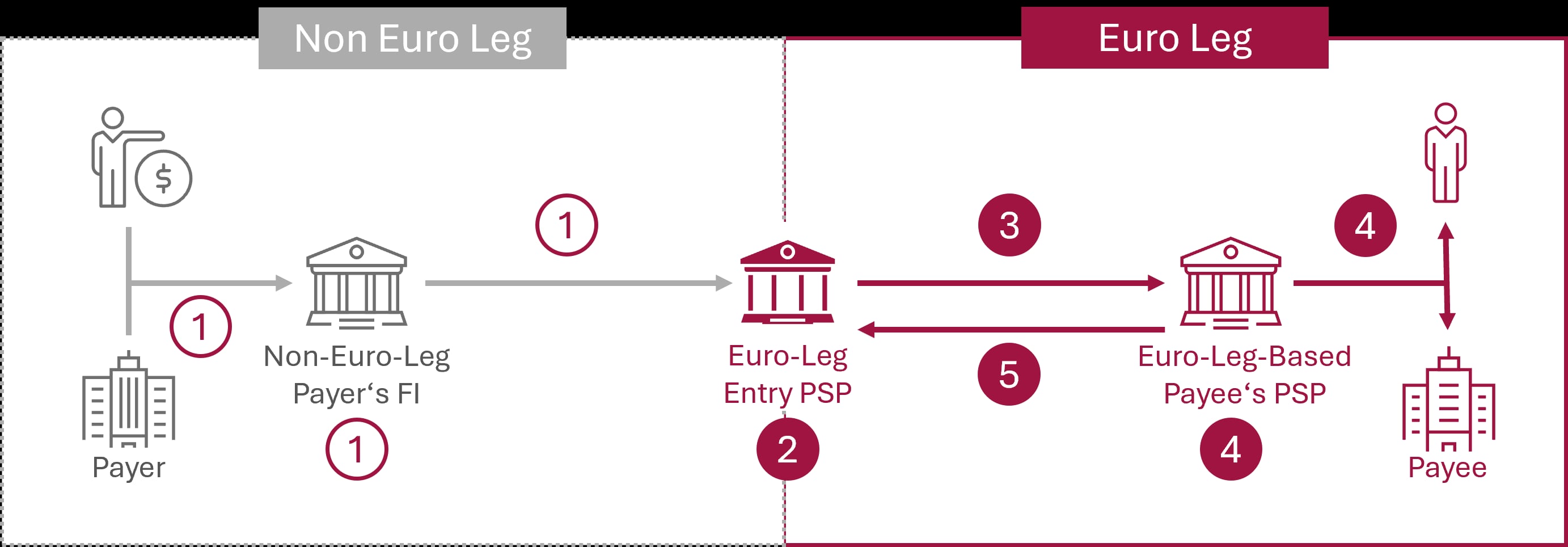
Figure 1. Process of an incoming OCT Inst transaction
- A payment is initiated in the non-euro leg.
- The Euro Leg Entry PSP receives the payment instruction, validates it, and converts the transaction into the OCT Inst format. It sets the euro leg time stamp.
- The transaction is forwarded through the Inter-PSP Space infrastructure to the Euro Leg-Based Payee’s PSP.
- The Payee’s PSP validates the payment and credits the beneficiary account.
- A positive confirmation is returned.
Outgoing OCT Inst (euro leg to non-euro leg)
For an outgoing payment, the transaction originates within the euro leg. The following steps provide a simplified view of an outgoing transaction (European Payments Council, 2025a):
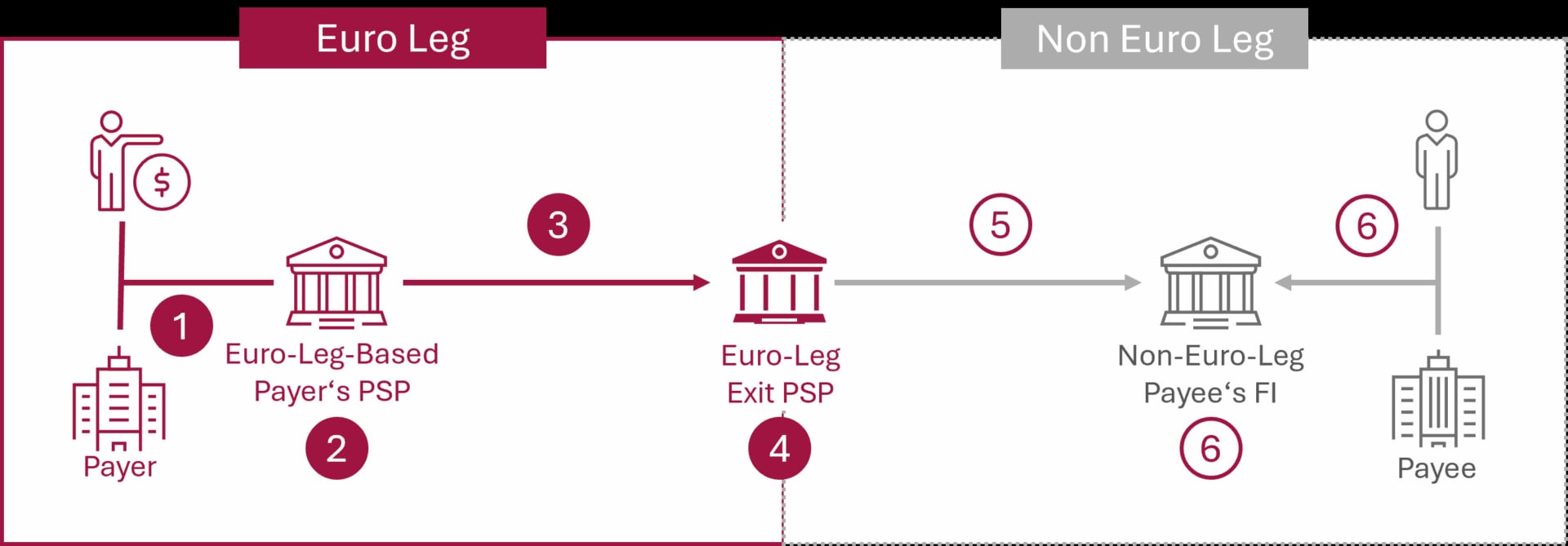
Figure 2. Process flow for an outbound OCT-Inst transaction
- The payer submits a payment instruction.
- The Euro Leg-Based Payer’s PSP performs all necessary validation and funds checks. An OCT Inst transaction is generated, and the euro leg time stamp is set.
- The transaction is transferred to the Euro Leg Exit PSP via the Inter-PSP Space.
- The Euro Leg Exit PSP receives and validates the transaction.
- The Exit PSP forwards the payment into the non-euro leg.
- The external payment infrastructure processes the transaction and returns the corresponding status information.
The Exit PSP is particularly important in this flow because it connects two different payment environments while preserving data consistency and supporting transparent status handling (European Payments Council, 2025a).
Settlement organisation
Settlement arrangements under the scheme centre on the euro leg and follow instant-payment processing rules. A key concept is the Execution Time Cycle, which defines the transaction timeline. It begins when the euro leg Entry PSP receives an incoming OCT Inst transaction or when the Euro Leg-based Payer’s PSP receives an outgoing payment instruction. The relevant PSP then performs the required validations in real time to establish that the transaction is complete, meets the processing requirements, and is ready for instant execution.
Before setting the euro-leg timestamp, the Euro Leg Entry PSP has up to 60 seconds to complete the required preparatory checks and actions. The same timeframe is recommended for the Euro Leg Exit PSP before it returns or forwards the transaction to the non-euro leg (European Payments Council, 2025b).
Once the checks are completed and the time stamp is set, the execution period begins. Under the scheme’s standard timeline, a positive or negative confirmation should be received within 10 seconds. Exceptional processing is subject to a 20-second timeout, followed by a further five-second period for the confirmation message to reach the Euro Leg Entry PSP for an incoming transaction or the Euro Leg-based Payer’s PSP for an outgoing transaction. These time limits apply to the euro leg; end-to-end performance also depends on the arrangements used in the non-euro leg (European Payments Council, 2025b).
Accordingly, euro-leg processing requires the following capabilities (European Payments Council, n.d.):
- continuous 24/7/365 availability,
- straight-through processing,
- real-time validation and fund checks,
- permanent routing capabilities,
- real-time liquidity management,
- immediate status processing.
For an incoming transaction, the Entry PSP must maintain settlement certainty until it receives the relevant confirmation. For an outgoing transaction, the Payer’s PSP or its infrastructure must not simply assume that a transaction has failed just because a timeout has occurred; settlement certainty must remain in place until a clear confirmation or rejection is received (European Payments Council, 2025a).
Exception handling processes
Euro Leg-based Payer’s and Payee’s PSPs can use standardised, automated processes for R-transactions (reject, return, and recall) and scheme inquiries.
- An OCT Inst Reject occurs in the euro leg when a transaction is rejected before inter-PSP settlement. In this case, the original amount sent by the payer must remain unchanged.
- An OCT Inst Return occurs after inter-PSP settlement in the euro leg if the Euro Leg Exit PSP cannot forward the transaction, no confirmation is received from the non-euro leg, or the payee’s financial institution in the non-euro leg cannot execute it.
- An OCT Inst Recall occurs when either the non-euro-leg Payer’s FI requests cancellation from the Euro Leg Entry PSP, or when the Euro Leg-based Payer’s PSP submits such a request to the Euro Leg Exit PSP. A recall does not guarantee the return of funds, and the recovered amount may differ from the original one.
The R-transaction message should be routed through the same path taken by the original OCT Inst transaction with no alteration of the data. Any gains or losses resulting from a currency conversion are borne by the euro-leg actor that converted the original transaction, unless otherwise agreed with its counterparty (European Payments Council, 2025a).
Consequences for banks
For European banks, this settlement model can require significant operational change. Batch-based processes alone cannot meet the scheme’s real-time processing and availability requirements; participating institutions need infrastructure and operational controls that support continuous processing across the relevant payment functions (European Payments Council, 2025b).
The scheme is based on ISO 20022 XML messages and can make use of intermediary PSPs and Clearing and Settlement Mechanisms within the euro leg (European Payments Council, 2025c). Its design builds on procedures, standards, and infrastructure already familiar from SEPA instant payments. Applicable transaction limits and processing conditions should be checked against the current OCT Inst rulebook and the relevant participant or infrastructure arrangements; under the current rulebook, the maximum amount per transaction is EUR 100,000 (European Payments Council, 2025d).
Conclusion
OCT Inst demonstrates how the euro leg of an international instant credit transfer can be processed more quickly, transparently, and predictably through defined roles, standardised messages, and strict real-time timelines. Entry PSPs and Exit PSPs connect the European instant-payment environment with external payment systems, while settlement certainty, status handling, and continuous availability become essential operational capabilities. For banks and PSPs, OCT Inst is therefore more than an additional payment flow: it requires an operating model capable of supporting 24/7/365 processing, rapid decision-making, and reliable coordination across payment infrastructures.
Assessing OCT Inst for your institution
Sources
- 1. European Payments Council. (2025a). 2025 One-Leg Out Instant Credit Transfer rulebook, version 1.1.
- 2. European Payments Council. (2025b). Questions & Answers on the One-Leg Out Instant Credit Transfer Scheme.
- 3. European Payments Council. (2025c). One-Leg Out Instant Credit Transfer Inter-PSP Implementation Guidelines 2025, version 1.0.
- 4. European Payments Council. (2025d). Maximum Amount for Instructions under the 2025 One-Leg Out Instant Credit Transfer Rulebook version 1.1.
- 5. European Payments Council. (n.d.). One-Leg Out Instant Credit Transfer.