Digital Assets and Digital Market Infrastructure – A Structural Shift in Treasury and Capital Markets
Capital market infrastructure is undergoing structural realignment. What was long framed as a “crypto topic” is evolving into an institutional transformation: tokenized securities, regulated digital trading venues, stablecoin-based settlement rails and the prospect of 24/7 execution are redefining market mechanics.


- ICE and NYSE: Blueprint for 24/7 Tokenized Markets
- 360X: The Institutional Digital Market Model in Frankfurt
- Clearstream and D7: Digitization Within the CSD Regime
- Tokenized Collateral: A Structural Lever for Treasury
- From Batch-Based Liquidity to Continuous Market Exposure
- Balance Sheet Implications and Valuation Dynamics
- Treasury as Integration Layer Between Finance and Technology
- From Observation to Strategic Action
- Strategic Priorities for Treasury
- Conclusion: The Programmable Capital Market
- Sources
Included in this collection:
Open collection
High-NPL institution: Requirements for NPL strategy, governance and operational organisation

EBA Supervisory Reporting Simplification or Complication

9th MaRisk Amendment 2026 – Supervisory Briefing: Focus following the consolidation phase

End of support for SAP Bank Analyzer – msg.ORRP as an alternative

Why Europe’s banks need to reassess geopolitical risks

Bundesbank’s Targeted Review of the design of lending guidelines in the LSI environment

AMLR Redefines Risk Analysis: Moving Beyond a Checkbox Exercise – Why Regulators Are Rethinking Their Approach

9th Amendment to the MaRisk 2026: What reliefs does the consultation offer to small and very small institutions (SNCIs)?

Instant Payments Regulation: Implementing Reporting Requirements Efficiently – Excel Upload or an Integrated Reporting Solution?

Preferential Treatment of Retail Exposures in the Credit Risk Standardised Approach (CRSA) – EBA clarifies requirements regarding the granularity criterion
Two developments illustrate this shift:
- the digital market infrastructure initiatives of the Intercontinental Exchange (ICE) together with the New York Stock Exchange.
- the digital asset strategy of Deutsche Börse, including 360X and the DLT-based post-trade infrastructure of Clearstream.
This is not a peripheral development for bank treasury functions or asset managers. It represents a structural intervention in liquidity management, settlement architecture and balance sheet steering.

AI in treasury – from periodic closing to permanent control function
Treasury is evolving from a periodically operating functional area to a permanent control authority. In this reality, AI serves as a structural enabler of control, responsiveness, and decision quality. Learn how banks are already using AI in treasury for these purposes in our free online information event on July 3, 2026. (Only in German)
ICE and NYSE: Blueprint for 24/7 Tokenized Markets
Intercontinental Exchange is advancing a digital market infrastructure that combines tokenized securities with blockchain-enabled settlement capabilities.
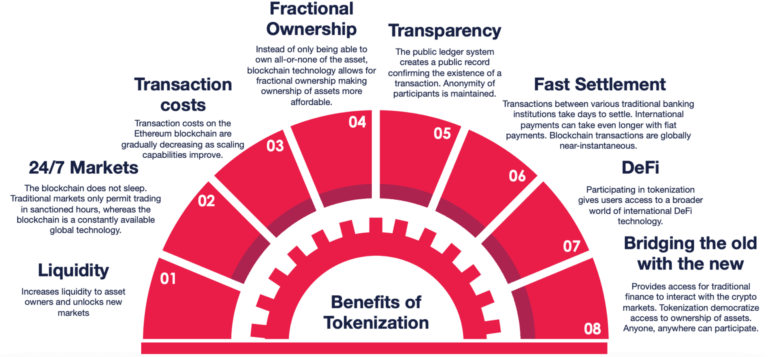
Figure 1: Benefits of tokenization (Source: EasyCrypto1)
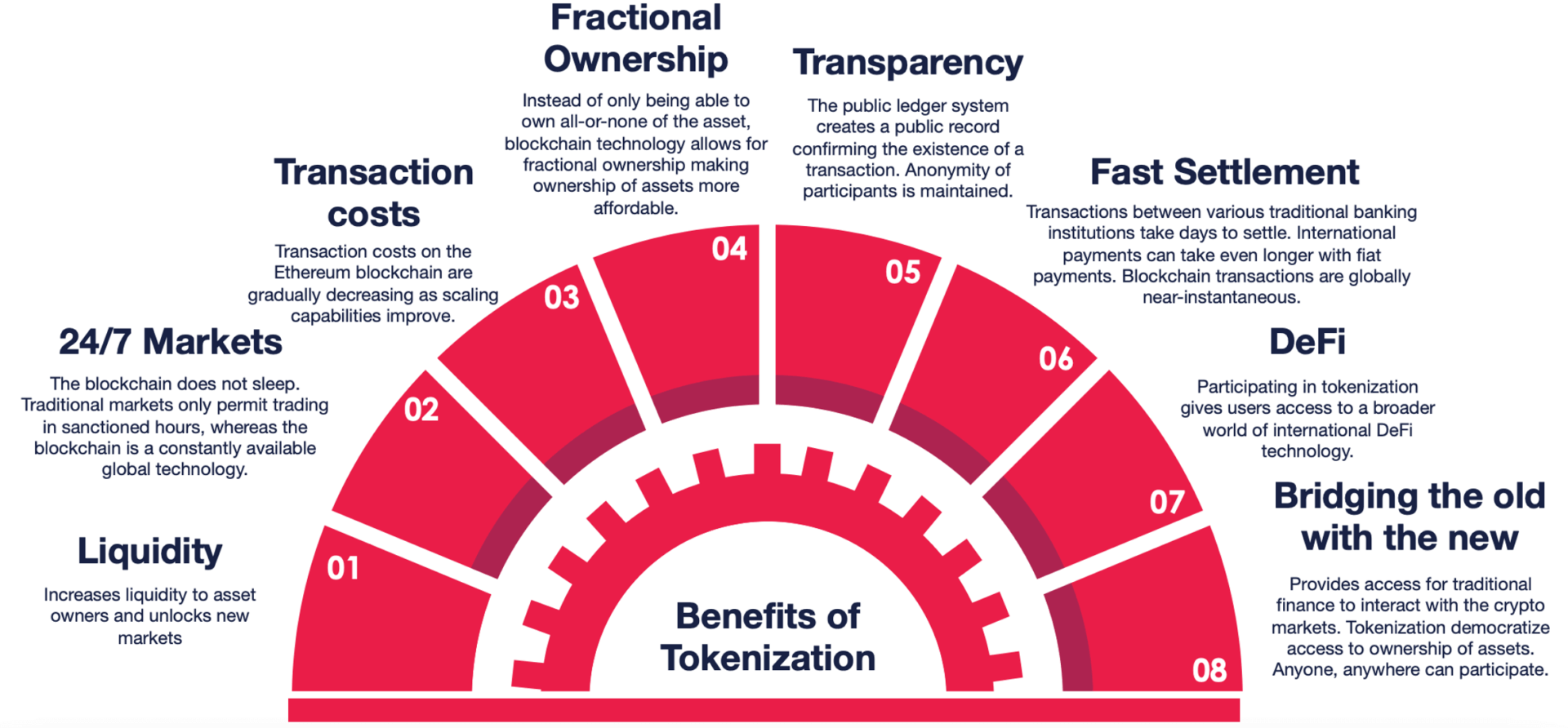
The strategic target model: digitized equities and ETFs that remain legally and economically fungible with traditional instruments yet are tradable on-chain and capable of near-instant settlement.
The strategic rationale is straightforward:
- Tokenization enables direct, atomic transfer of ownership.
- Stablecoins or tokenized commercial bank money function as the settlement asset.
- Trade and settlement can be synchronized and, in principle, executed on a 24/7 basis.
This model detaches capital markets from traditional banking and clearing windows.
For treasury, the implications are structural:
- The traditional settlement “float” disappears.
- The buffer between trade execution and cash availability compresses to near zero.
- Multi-day settlement cycles are replaced by T+0 or instant delivery-versus-payment logic.
The transition from T+2 to T+1 was already operationally demanding.
A move to T+0 is not incremental — it fundamentally alters liquidity reserve mechanics.
Treasury functions shift from cyclical liquidity provisioning to continuous liquidity availability. Intraday liquidity management evolves into real-time liquidity surveillance. Collateral must be permanently mobilizable. Liquidity buffers must be structurally recalibrated.
360X: The Institutional Digital Market Model in Frankfurt
In Europe, this development is accelerating. With 360X, Deutsche Börse is positioning a regulated trading venue for tokenized financial instruments.
The differentiator: a fully institutional framework embedded in the existing regulatory and post-trade architecture.
Key characteristics:
- Full regulatory alignment within the European market framework.
- Integration into established settlement and reporting infrastructures.
- Focus on digital securities and tokenized real-world assets.
- Institutional governance standards.
The trading of DLT-based bonds marked an operational milestone. Tokenized equity formats (e.g. xStocks) illustrate the bridging logic between traditional underlyings and digital trading rails.
The strategic inflection point, however, lies not in the trading venue itself but in post-trade integration.
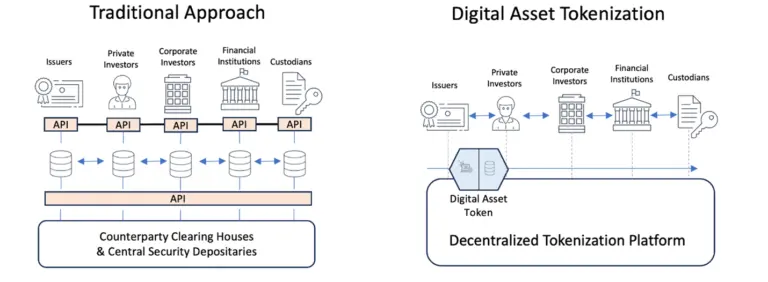
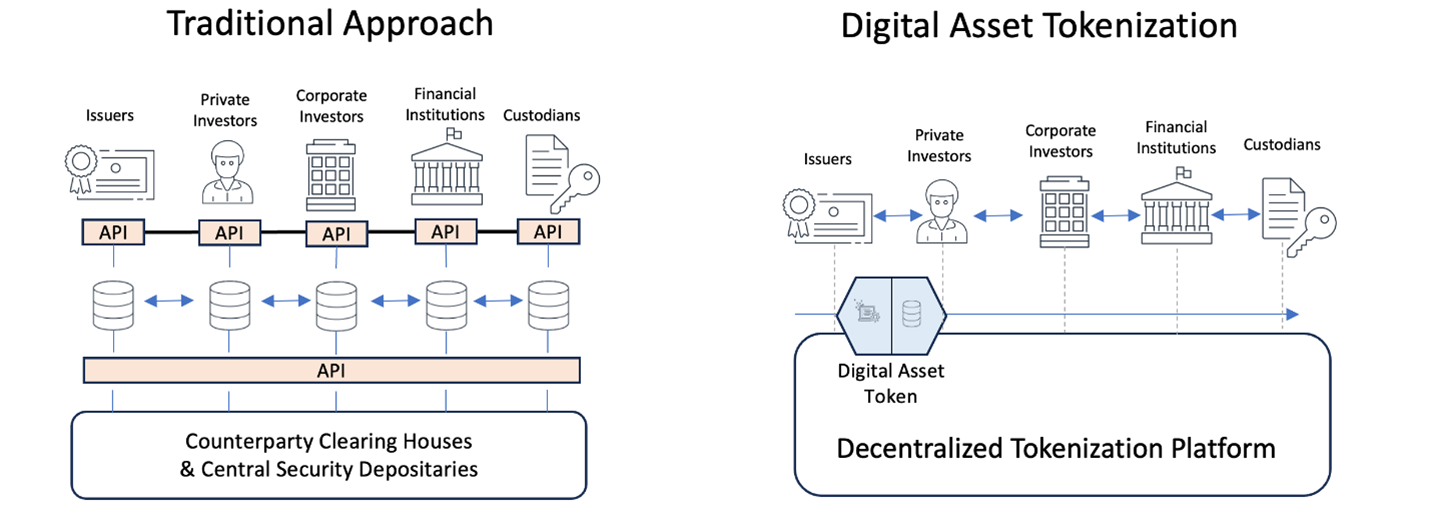
Figure 2: Tradition vs. tokenization (Source: Oksana Meier2)
Clearstream and D7: Digitization Within the CSD Regime
The structural depth of the transformation is anchored in the DLT initiative of Clearstream. The D7 platform establishes digital issuance and settlement infrastructure embedded within the European CSD regime and aligned with regulatory requirements.
This is not a parallel system outside the regulated market order. It is digitization within the existing capital market architecture.
The emerging target model:
- Digital securities issued natively on distributed ledger infrastructure.
- Custody maintained within the established Clearstream framework.
- Settlement supported by integrated digital forms of money.
- Future connectivity to central bank digital currency (CBDC) rails.
- Automated corporate actions.
- Programmable collateral logic.
This represents a fully digitized securities lifecycle embedded in the regulated environment.
Tokenized Collateral: A Structural Lever for Treasury
For treasury, the digitization of collateral within the Clearstream ecosystem becomes a decisive efficiency lever.
Tokenized collateral materially changes:
- Mobilization speed: Collateral transfers that historically required days can be executed in near real time.
- Operational processing: Programmatic, audit-proof and transparent transfers replace manual and paper-based workflows.
- Real-time valuation: Continuous mark-to-market visibility enhances precision in liquidity steering and risk control.
- Margin integration: Programmable logic enables automated allocation to margin calls, trading exposures or credit facilities.
In a market defined by instant settlement and real-time liquidity, tokenized collateral creates structural competitive advantage.
From Batch-Based Liquidity to Continuous Market Exposure
Traditional liquidity models are anchored in time windows:
- Central bank operating hours
- TARGET settlement cycles
- CLS windows
- SWIFT batch processing
Treasury functions were optimized around these temporal boundaries.
Digital markets operate synchronously. Liquidity must be continuously available rather than periodically mobilized. Exposure monitoring becomes permanent. New liquidity instruments, such as stablecoins, tokenized deposits, emerge outside the correspondent banking paradigm and require dedicated wallet governance and balance sheet classification.
Liquidity management becomes a real-time discipline. Automation, algorithmic allocation and system-level integration between trading venues, wallet infrastructure and treasury management systems become prerequisites.
Balance Sheet Implications and Valuation Dynamics
Instant settlement compresses counterparty exposure duration and reduces settlement risk. Transitional “in limbo” positions between trade date and settlement date diminish. At the same time, new balance sheet dynamics emerge:
- Regulatory classification of digital deposits.
- Accounting treatment of tokenized instruments.
- Real-time valuation of collateral.
- Dynamic haircut modeling.
If collateral is continuously marked to market, P&L volatility becomes more immediate. End-of-day valuation logic migrates toward continuous revaluation cycles.
Treasury must operate within a balance sheet that is technically updated in real time.
Treasury as Integration Layer Between Finance and Technology
In a 24/7 digital market, treasury becomes an integration function between financial control logic and technology architecture. Digital custody, wallet management, DLT interfaces and treasury management platforms form a unified control environment.
The strategic mandate is clear:
- Preserve operational resilience.
- Ensure permanent liquidity readiness.
- Integrate programmable settlement logic.
- Maintain regulatory robustness.
Treasury evolves from liquidity steward to architect of digital value flows.
From Observation to Strategic Action
Digital assets were long considered a peripheral innovation topic. That positioning is no longer defensible. With established infrastructure operators such as Intercontinental Exchange and Deutsche Börse embedding tokenization into core market architecture, this is no longer experimental innovation. It is infrastructure policy.Digitalization is migrating from innovation periphery to regulated market core.
The relevant questions are now operational:
- Are treasury platforms DLT-enabled?
- Can programmable settlement assets be integrated from a regulatory and technical perspective?
- Is 24/7 liquidity and collateral monitoring operationally feasible?
- Is digital asset governance institutionalized?
- Are liquidity models compatible with a non-cyclical market structure?
Digital assets are not a separate innovation silo. They are becoming part of standard market infrastructure. Treasury must adjust its control framework accordingly.
Treasury must learn to work with a balance sheet that is technically updated in real time.
Strategic Priorities for Treasury
Five structural fields of action define competitiveness:
- Digital Liquidity Readiness:
Develop capability to manage tokenized deposits and stablecoin exposures as complementary liquidity layers. - Collateral Digitization Strategy:
Assess impact on mobilization speed, haircut policy, funding costs and capital efficiency. - Settlement Model Transformation:
Recalibrate liquidity buffers and intraday funding models for T+0 and real-time settlement environments. - Accounting and Regulatory Alignment:
Proactively address valuation, capital requirements and regulatory classification of digital assets. - End-to-End Technology Integration:
Establish real-time interfaces between core banking, treasury platforms and DLT infrastructures. Manual bridging mechanisms are structurally insufficient in synchronous markets.
Conclusion: The Programmable Capital Market
The initiatives of Intercontinental Exchange and Deutsche Börse signal a structural inflection point.
Digital assets are not evolving as a parallel ecosystem. They are being embedded into regulated capital market infrastructure.
The result is a programmable capital market:
- Assets represented as tokens
- Money represented as code
- Settlement executed synchronously
- Liquidity managed continuously
For treasury, this is not a process adjustment. It is a structural redefinition of liquidity steering, collateral management and balance sheet control. The strategic question is no longer whether digital exchanges will materialize. They are already taking shape.
The decisive issue is whether institutions shape this infrastructure proactively — or adapt once the operating logic of the market has already shifted.
Sources
-
1. easyCrypto, What is Tokenization in Crypto?, 22. October 2021
-
2. Oksana Meier, Tokenized Trading 101: A New Financial Frontier?, 21. July 2025
-
3. Deutsche Börse 360X, DekaBank, Union Investment, and 360X Set New Benchmark with DLT-Based Trade of Siemens Digital Bond, 11. August 2025
-
4. Deutsche Börse, D7 DLT: Clearstream Launches Tokenized Securities Platform, 4. November 2025
-
5. Treasury Today, Press release: Deutsche Börse Group announcements in digital assets, February 2026
-
6. Reuters, NYSE-parent Intercontinental Exchange develops platform for 24/7 tokenized securities trading, 19. January 2026
-
7. 7. ICE/NYSE, The New York Stock Exchange Develops Tokenized Securities Platform, 19. January 2026